
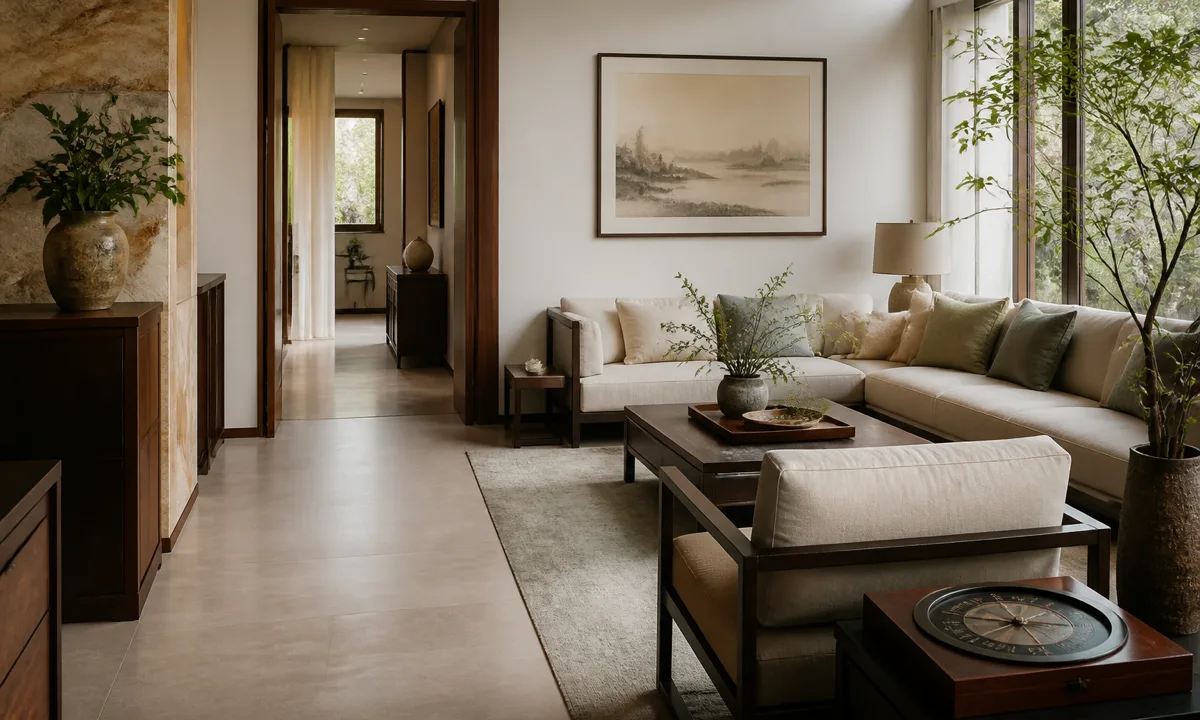
Quick answer: For Feng Shui beginners, start with the free, high-impact basics: clear the entrance, open pathways, fix the command position of your bed and desk, declutter one surface, balance light, and add one living plant. You don't need to buy anything or know the compass — flow, light and order are the foundation.
---
Why start here
Feng Shui can feel overwhelming — compasses, flying stars, five elements. But the practice has a practical core: a clear, bright, uncluttered space genuinely feels better and supports clearer thinking. The beginners' version is just that, applied room by room. Master the 7 steps below before you worry about any advanced technique.
The 7 first steps
- Clear the entrance — the front door and entryway are the "mouth of qi." Take 10 minutes: remove shoes, coats and clutter from the entry. This one step sets the tone for the whole home.
- Open the pathways — walk from each doorway to the main spots you use. Anything blocking the path (boxes, chairs, cables) is blocking energy. Move it.
- Fix the command position — in your bedroom and at your desk: place the bed/chair so you can see the door, with a solid wall behind. This is the single highest-impact placement in Feng Shui.
- Declutter one surface — pick the desk, the kitchen counter or the shelf that bothers you most. Clear it completely. One clear surface = one clear mind.
- Balance the light — dark corners feel stagnant. Add a lamp to the dimmest corner of each room you use most. Bright = active qi.
- Add one living plant — a healthy plant brings Wood (growth) and life. Start with an easy one: pothos, peace lily, or a jade plant (see lucky plants).
- Open the windows daily — five minutes of fresh air is the most literal form of good qi. Even in winter, a short airing helps.
What NOT to worry about (yet)
- The compass — skip it for now; beginners don't need the luo pan
- Flying stars — that's an advanced layer; the classic corner works first
- Buying objects — the first 6 steps are free; objects come later and only if you want them
- Being "wrong" — there is no perfect Feng Shui; it's a practice of intention, not a pass/fail test
A one-week beginner plan
| Day | Action |
|---|---|
| Mon | Clear the entrance + open windows |
| Tue | Clear the main pathway |
| Wed | Fix the bed's command position |
| Thu | Fix the desk's command position |
| Fri | Declutter one surface |
| Sat | Add a lamp to a dark corner |
| Sun | Add one plant + review the week |
When to go deeper
Once the basics feel natural, explore: bedroom rules, living room layout, money corner, and the full beginner's guide. Or book a consultation for a personal reading.
👉 See your element balance — your chart tells you which elements (and colors) to lean into next.
---
Related reading
- Feng Shui for small apartments — compact space tips
- Feng Shui living room layout
- Feng Shui bedroom rules
- What is Feng Shui? — the full guide
- Feng Shui guide — the hub
Frequently Asked Questions
What should a Feng Shui beginner do first?
Clear the entrance and open the main pathways. These two free steps set the foundation — a clear, unblocked space is the basis of all Feng Shui.
Do I need a compass for beginner Feng Shui?
No. Beginners should focus on flow, light and order first. The compass (luo pan) and flying stars are advanced techniques you can learn later.
How long does it take to see results from Feng Shui?
Small, physical changes (decluttering, lighting, repositioning) can be felt immediately — a clearer space feels clearer. Deeper "results" are a practice over time, not a quick fix.