
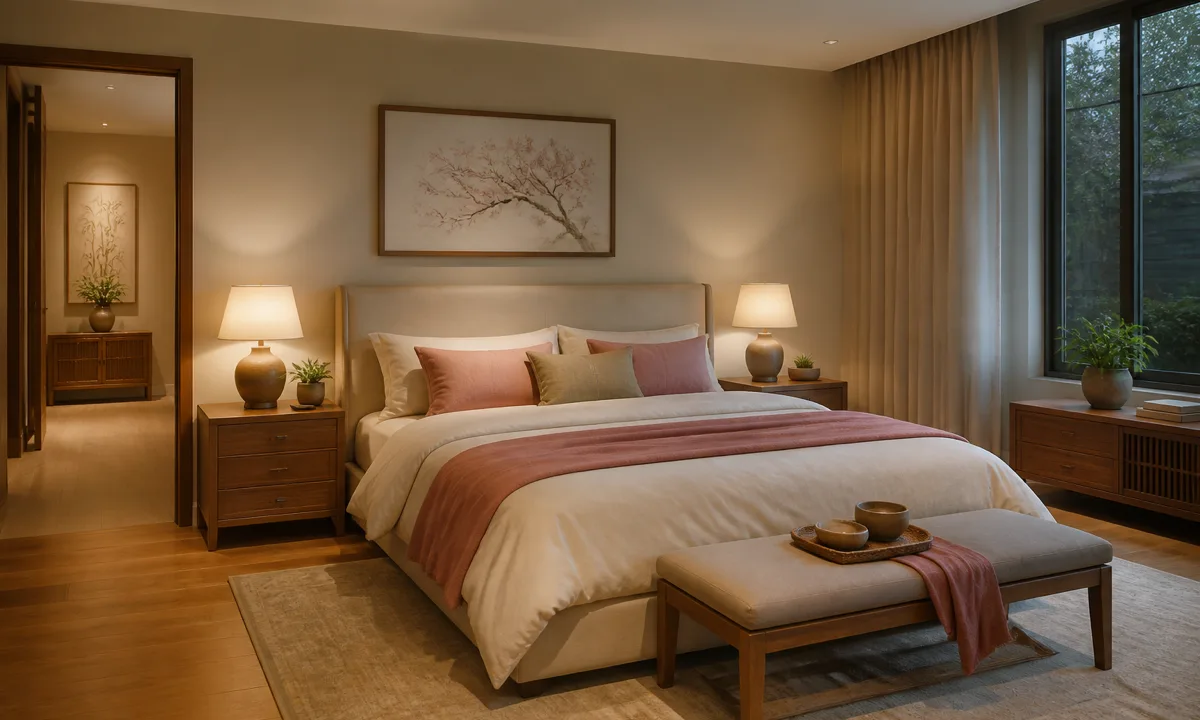
Quick answer: The best Feng Shui bedroom colors are calm, soft and slightly Yin: warm whites and creams, soft greens (Wood), earthy beiges and warm browns (Earth), and muted blues (Water). Avoid harsh reds and aggressive patterns, which are too stimulating for a rest space. Your personal Five Elements balance can suggest which hue feels most supportive to you.
---
The color logic in Feng Shui
Color in Feng Shui works through the five elements — each hue carries a quality:
| Element | Colors | Bedroom feel | Use it for |
|---|---|---|---|
| Wood 木 | Soft greens, teal | Growth, fresh, calming | Relaxed mornings, renewal |
| Fire 火 | Red, orange, purple | Warm, stimulating | Sparingly — accents only |
| Earth 土 | Beige, warm brown, ochre | Grounding, cozy, stable | The most restful base |
| Metal 金 | White, gray, silver | Clean, clear, precise | A crisp accent, not a whole room |
| Water 水 | Deep blue, black | Calm, deep, introspective | A calm accent, not overwhelming |
Best base colors for a bedroom
- Warm whites and creams — the safest, most restful base; bright without harshness
- Soft greens (Wood) — fresh and calming; good if you want a "renewal" feeling
- Earthy beiges and warm browns (Earth) — the most grounding; great for a cozy, stable room
- Muted blues (Water) — deep and calm; good for a quiet, introspective space
Colors to use sparingly or avoid
- Harsh reds and oranges — too stimulating; if you love them, use small accents only
- Heavy black — can feel heavy and draining as a wall color
- High-contrast patterns — visually active, works against a calm room
How to choose YOUR color
Two approaches:
- By feel — what makes you relax when you see it? Trust that; your bedroom should feel like you.
- By your Five Elements balance — if your chart runs low on an element, its color can be a gentle way to acknowledge it. For example, if your balance is Fire-heavy, cooler Water tones can feel balancing; if Earth-heavy, soft greens bring a fresh note.
The personal approach is why a chart-based reading can be useful — it tells you which elements are strong and which are quiet in your pattern, and the color system gives you something to do about it.
Practical color application
- Walls: warm white, soft beige, or a muted green/blue — flat, low-sheen
- Bedding: your favorite calming color; layers for softness
- Accents: pillows, throws, art, a plant — the element color you want to invite
- Keep it light: 60-30-10 works — 60% base, 30% secondary, 10% accent
A reminder
Colors are a framework for intention and atmosphere — not a guarantee of better sleep. Use what feels calm and right to you; Feng Shui is a lens, not a verdict.
👉 See your Five Elements balance — the free chart suggests which element colors may feel most supportive to you.
---
Related reading
- Five Elements explained — the pillar guide
- Feng Shui bedroom layout: the 7 rules that matter
- 12 Feng Shui bedroom rules for better sleep
- Feng Shui beginner's guide
Frequently Asked Questions
What is the best color for a Feng Shui bedroom?
Calm, slightly Yin colors: warm whites, soft greens (Wood), earthy beiges (Earth), or muted blues (Water). These support rest. Harsh reds and heavy patterns are best avoided or used sparingly.
Is red bad in a bedroom for Feng Shui?
Red is a Fire color — warm and stimulating. In a bedroom, use it sparingly as an accent (a pillow, a small art piece), not as a wall or dominant color, because it's too active for a rest space.
What color should the bedroom walls be in Feng Shui?
Warm white, soft beige, or a muted green/blue with a low sheen are the safest choices. They read as calm and slightly Yin, which supports sleep.