
In brief
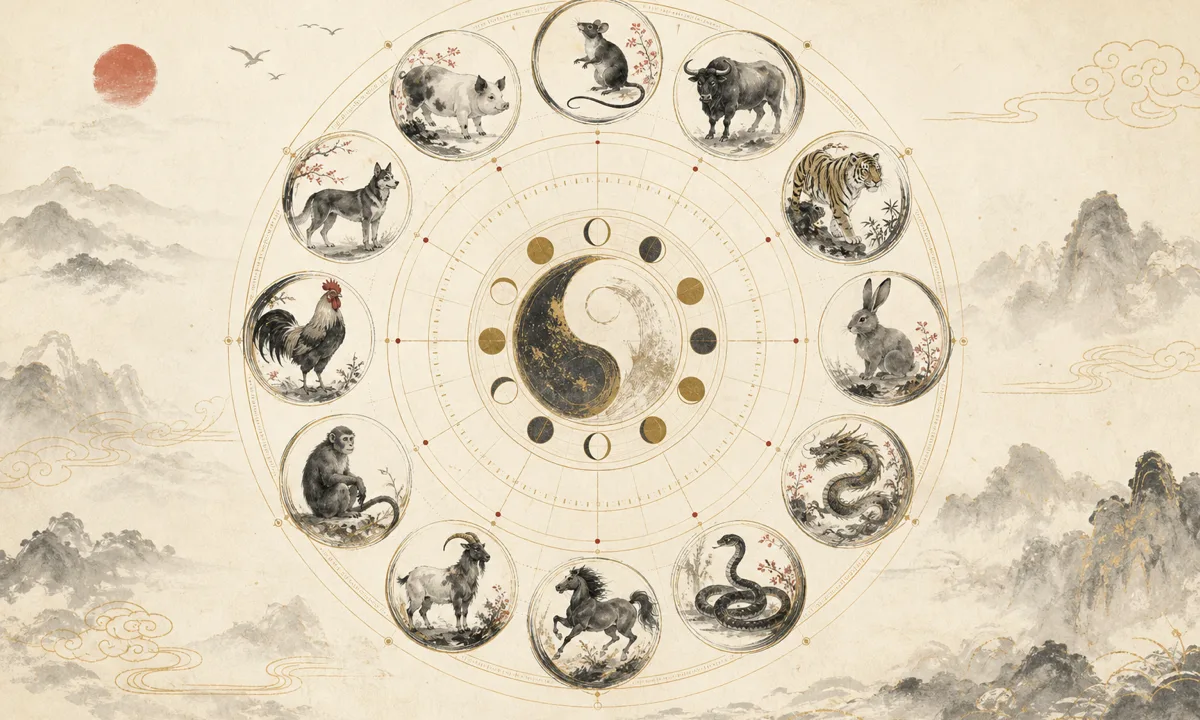
The Chinese zodiac identifies the animal associated with the earthly branch of a birth year. BaZi uses the heavenly stems and earthly branches of the year, month, day and hour—up to eight characters—so it provides a more detailed symbolic structure.
Key takeaways
- The zodiac animal represents one earthly branch, not a complete BaZi chart.
- BaZi can include eight characters across four pillars; an unknown birth time leaves the hour pillar unavailable.
- People born in the same zodiac year can have different Day Masters and chart structures.
- Calendar boundaries matter, especially for births near Lunar New Year or the Beginning of Spring.
Why is one zodiac animal only part of the chart?
Your zodiac animal comes from the earthly branch of the year pillar. It connects you with a twelve-year cycle and carries a rich body of cultural symbolism.
But everyone born in the same zodiac year does not share the same complete chart. The month, day and hour pillars add six more characters, while the year pillar itself also includes a heavenly stem.
Why does the calendar boundary matter?
BaZi commonly uses solar terms to define the astrological year and month. The year boundary is therefore around the Beginning of Spring rather than automatically Lunar New Year or January 1.
If you were born near that boundary, a calendar-based calculation matters more than guessing from the Western year number. Birthplace and historical time zone can also affect the local date and hour used for the chart.
When should you use zodiac or BaZi?
Zodiac symbolism is approachable, social and easy to recognize. BaZi is more detailed and better suited to questions about element balance, Day Master relationships and timing patterns.
You do not need to choose one and reject the other. Enjoy the zodiac as a cultural symbol, and use the complete chart when you want a more structured reading.
Which lens should you use?
Choose the level of detail that matches your question.
- Use the zodiac when you want a simple cultural symbol or an introduction to the twelve-animal cycle.
- Use BaZi when you want to explore Day Master, Five Elements balance or relationships among the four pillars.
- If your birthday is near a calendar boundary, verify it with a reliable calendar calculation instead of guessing from the Gregorian year.
- If birth time is unknown, keep the hour pillar blank and treat detailed timing as less certain.
---
Related reading
- Free BaZi calculator — compare your chart
- Chinese Zodiac hub — the pillar guide
- What is BaZi?
- What is a Day Master?
Sources
- Hong Kong Observatory — Heavenly Stems and Earthly Branches - Reference for the sexagenary cycle and the Eight Characters formed by year, month, day and hour.
- The Metropolitan Museum of Art — Set of twelve zodiac animals - Museum context for the established animal order and its pairing with the calendrical cycle.
- Hong Kong Observatory — The 24 Solar Terms - Reference for the solar-term system and seasonal calendar context.