In brief
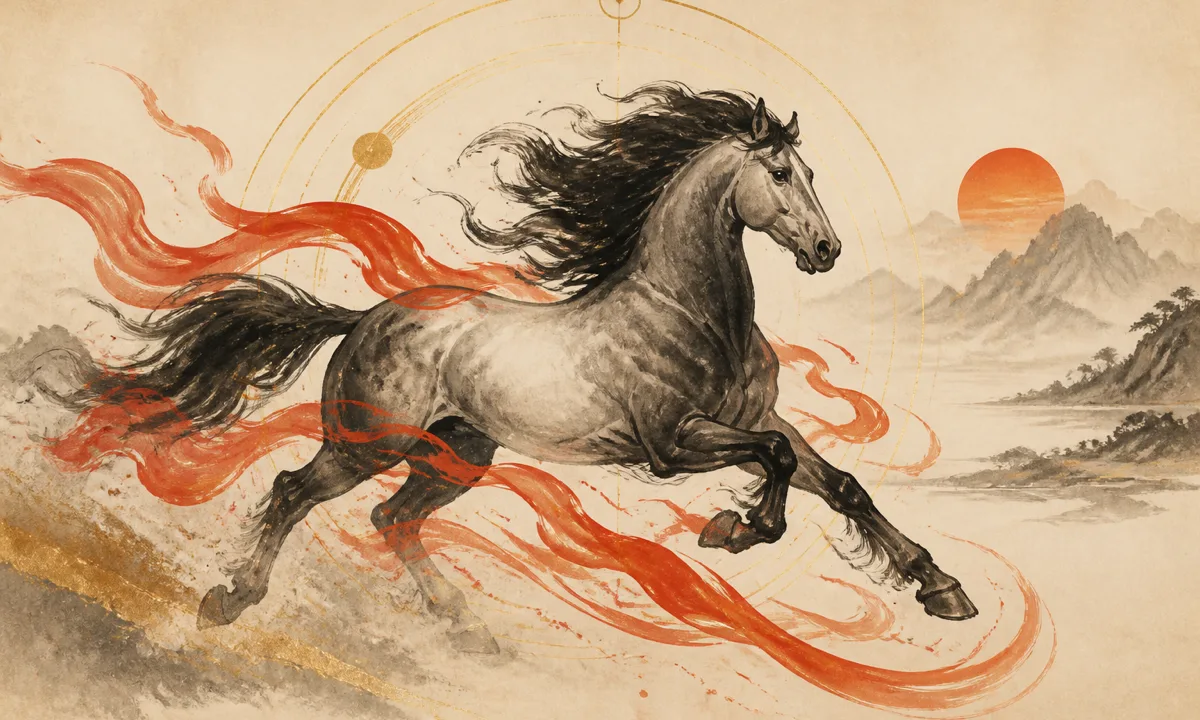
In BaZi, 2026 is the Bing-Wu(丙午)Fire Horse year. It adds a strong Fire-themed annual influence to the calendar, but it does not create one universal prediction. Its meaning depends on how Bing and Wu relate to a person’s confirmed Day Master, elements and natal pillars.
Key takeaways
- Bing-Wu combines Yang Fire with the Horse branch, which also carries a strong Fire association.
- Many BaZi schools use the Beginning of Spring, around February 4, as the annual boundary; Lunar New Year in 2026 began on February 17.
- The same Fire influence can represent support, expression, resources or pressure in different charts.
- A general Fire Horse article cannot replace a personal chart or supplied Da Yun cycle.
Why is 2026 called the Fire Horse year?
The sexagenary Gan-Zhi cycle pairs ten heavenly stems with twelve earthly branches. The 2026 pair is Bing-Wu: Bing is traditionally classified as Yang Fire, while Wu is the Horse branch and has a strong Fire correspondence.
This creates a year with repeated Fire symbolism. That description identifies the annual stem and branch; it does not by itself tell whether Fire is supportive or challenging for an individual.
When does the 2026 Fire Horse year begin?
The answer depends on the convention being discussed. The Smithsonian identifies February 17, 2026 as the start of the Fire Horse year in the Lunar New Year calendar.
Many BaZi traditions use Spring Commences, or Li Chun, around February 4 as the Gan-Zhi year boundary. People born near either boundary should use a calculator with a clearly stated convention instead of assuming the answer from the Gregorian year.
What themes are associated with strong Fire symbolism?
In traditional Five Elements language, Fire is associated with visibility, expression, speed, warmth and outward activity. In modern reflection, that can be used as a prompt to examine momentum, communication and overstimulation.
These are broad symbolic themes. For one chart Fire may be supportive; for another it may increase pressure or excess. No universal claim about wealth, romance, career or health follows from the year name alone.
How should 2026 be read against a personal chart?
Begin with the confirmed Day Master and natal pillars, then identify how Bing and Wu relate to the elements already present. Only use combinations, clashes or Ten God roles that the calculated chart actually supplies.
A more detailed annual consultation may also consider the person’s confirmed Da Yun cycle and solar-term months. Without those facts, keep timing broad and probabilistic.
How can you read your 2026 outlook responsibly?
Move from the annual label to the personal chart in a clear order.
- Confirm your natal Four Pillars and whether the hour pillar is available.
- Identify the Day Master and the chart’s supplied supportive and challenging elements.
- Compare Bing Fire and the Wu Horse branch with the confirmed natal pillars.
- Use solar-term month windows only when the calculation supplies them.
- Treat themes as planning prompts, not guarantees of profit, marriage, illness or a specific event.
---
Related reading
- Five Elements hub — the pillar guide
- What is BaZi?
- What is a Day Master?
Sources
- Hong Kong Observatory — Heavenly Stems and Earthly Branches - Reference for the Bing-Wu pair within the sexagenary Gan-Zhi cycle.
- Hong Kong Observatory — What year is it today? - Explains the distinction between official Chinese calendar practice and the Spring Commences boundary used by fortune-telling traditions.
- Smithsonian Institution — Lunar New Year Celebration - Identifies February 17, 2026 as the start of the Fire Horse year in the Lunar New Year calendar.